A Brief Overview of FTTx Solutions Using PON Technology
PON (Passive Optical Network) technology is the backbone of most modern fiber-optic internet networks used to deliver services to end-users, broadly known as FTTx.
Here is a simplified explanation of how these solutions work and their core components:
What is FTTx and how does PON relate to it?
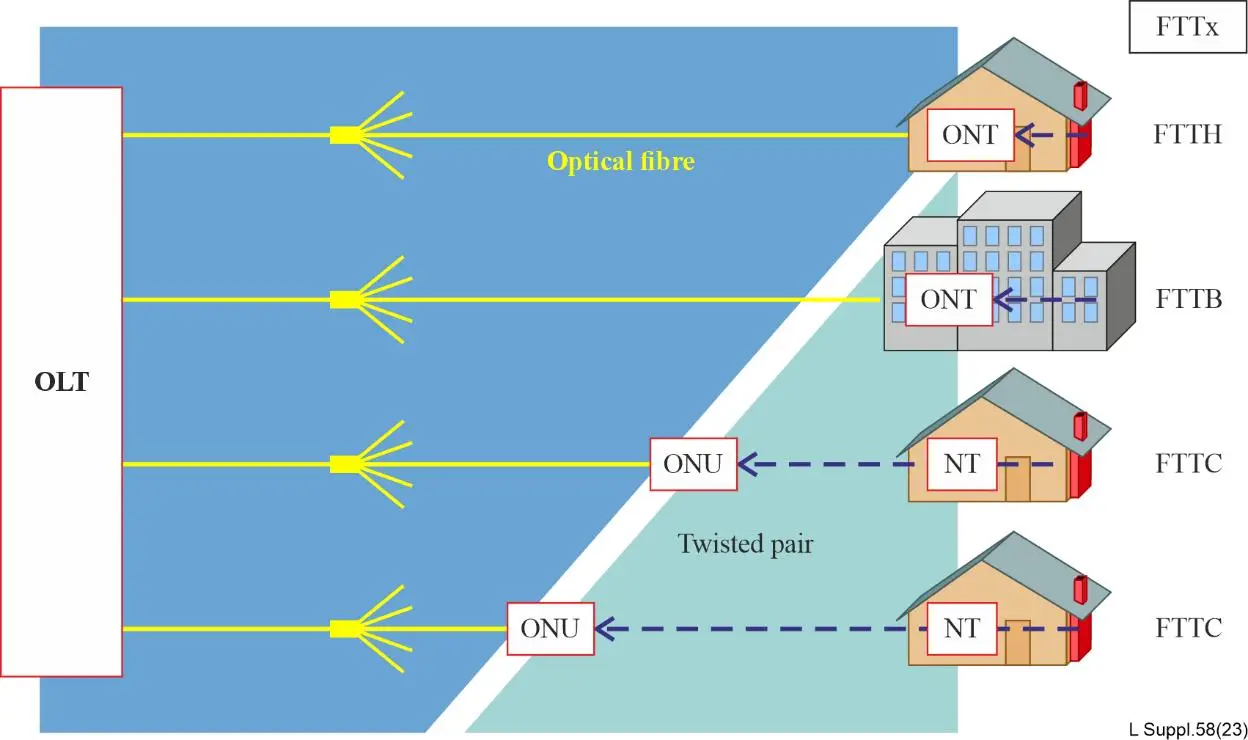
FTTx (Fiber to the x)
A general term that describes how close the fiber optic cable gets to the end-user. The "x" changes based on the endpoint (e.g., Home, Building, or Cabinet).
PON (Passive Optical Network)
The specific technology used to implement FTTx networks. It is called "passive" because it does not require any electrically powered equipment in the distribution path between the service provider and the customer. Instead, it relies on unpowered "optical splitters" to divide the signal.
Core Components of a PON Network
OLT (Optical Line Terminal)
Location: Inside the central office or data center (operated by the service provider or facility management).
Function: It is the "brain" of the network. It converts electrical signals into optical (light) signals and manages the data flow to and from the end-users.
ODN (Optical Distribution Network) & Splitters
Location: In streets, outdoor cabinets, or building corridors.
Function: This is the physical fiber cabling and splitters. An optical splitter acts like a glass prism; it takes a single beam of light from the OLT and splits it to serve multiple users without needing any electrical power.
ONU/ONT (Optical Network Terminal)
Location: At the end-user's premise (inside a home, office, or factory).
Function: It receives the optical signal and converts it back into electrical signals (Ethernet or Wi-Fi) so your devices can use it. (casually referred to as the "fiber router").
Common Types of FTTx
FTTH (Fiber to the Home)
The fiber cable reaches directly inside the user's home or apartment. (Provides the highest speed and stability).
FTTB (Fiber to the Building)
The fiber reaches the basement or telecom room of a building. The internet is then distributed to individual apartments using standard copper cables (Ethernet).
FTTC (Fiber to the Cabinet)
The fiber reaches a street telecom cabinet, and the remaining distance to the homes is covered using legacy copper telephone wires (VDSL).
Why use PON technology for FTTx? (Key Benefits)
Cost Efficiency
Running a single fiber cable from the central office and splitting it to serve dozens of customers drastically reduces cabling and infrastructure costs.
High Reliability & Immunity
Because the path from the central office to the user uses passive splitters, it requires no power in the field. This means the network is unaffected by street power outages and is completely immune to electromagnetic interference.
Massive Speeds
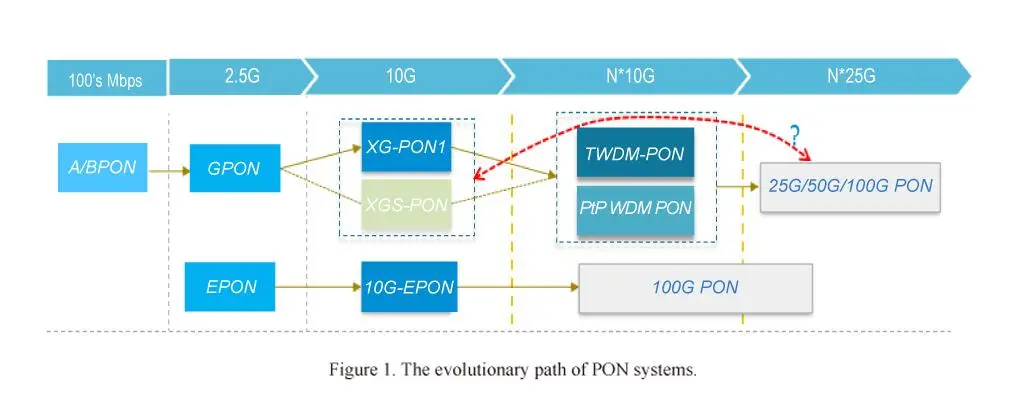
Modern PON technologies (like GPON and XGS-PON) support speeds starting at 2.5 Gbps and can easily scale to 10 Gbps or 50 Gbps.
Long-Distance Coverage
The distance between the central office (OLT) and the end-user (ONT) can reach up to 20 kilometers (about 12.4 miles) without needing any signal boosters or repeaters.